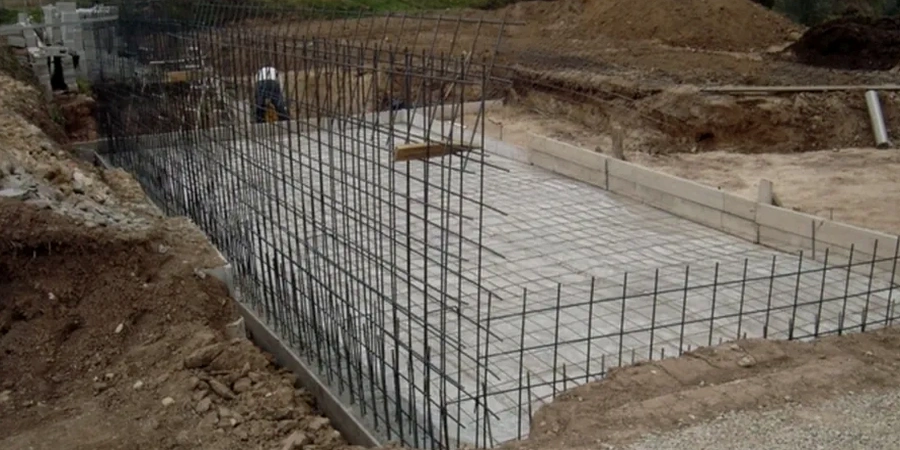
Foundations in Bedford must accommodate the region’s complex glacial till stratigraphy, where dense boulder clay overlies variable sand and gravel lenses. Borehole investigations typically reveal high bearing capacities at depths of 2 to 4 metres, yet shrink-swell clays near the surface pose seasonal volume-change risks. Geotechnical engineers therefore prioritise ground investigation phases that include trial pits, rotary cores, and dynamic probing to map lateral variability. The underlying Oxford Clay formation, encountered in deeper excavations, necessitates careful assessment of consolidation behaviour and long-term creep. Site-specific parameters such as undrained shear strength and stiffness modulus are derived from triaxial testing, ensuring that foundation designs mitigate differential settlement. Groundwater monitoring across Bedford’s floodplain zones is critical, as perched water tables can affect excavation stability and foundation performance. These technical considerations underpin the selection of robust foundation solutions for both residential and commercial developments throughout the borough.
Adopted foundation methods in Bedford range from traditional strip footings to more sophisticated piled solutions. For low-rise structures, reinforced concrete strip footings are common where competent glacial till is encountered within 1.5 metres of ground level. However, where near-surface clays exhibit high plasticity, deep trench fill or short-bored piles are specified to transfer loads to deeper, less reactive strata. For medium to high-rise projects, continuous flight auger (CFA) piles or driven precast concrete piles are utilised to penetrate through the till into underlying sandstone or chalk formations. Raft foundations are occasionally employed on sites with moderate uniform settlement potential, particularly where groundwater control is feasible. Each method is validated through load testing and settlement monitoring during construction, with observational approaches used to refine design assumptions. The choice depends on structural loading, ground conditions, and the proximity of existing infrastructure, ensuring long-term stability and performance.
Local standards for foundation design in Bedford derive primarily from the British Standards (BS 8004 and BS EN 1997-1) supplemented by specific guidance from the Bedford Borough Council’s local plan and the Environment Agency’s flood risk policies. The National House Building Council (NHBC) standards also influence residential projects, particularly concerning ground movement classification and minimum foundation depths to avoid seasonal desiccation. All geotechnical reports must comply with Eurocode 7’s limit state design principles, requiring partial factors on actions and resistances. The Council mandates that any foundation system on sites within 250 metres of former quarry workings or historical clay extraction areas undergo additional intrusive investigation to identify potential voids or dissolution features. Additionally, sustainability considerations align with local planning policies encouraging reuse of excavated materials and low-carbon concrete mixes. Adherence to these standards ensures that foundations meet safety, durability, and environmental requirements specific to Bedford’s geology and regulatory framework.
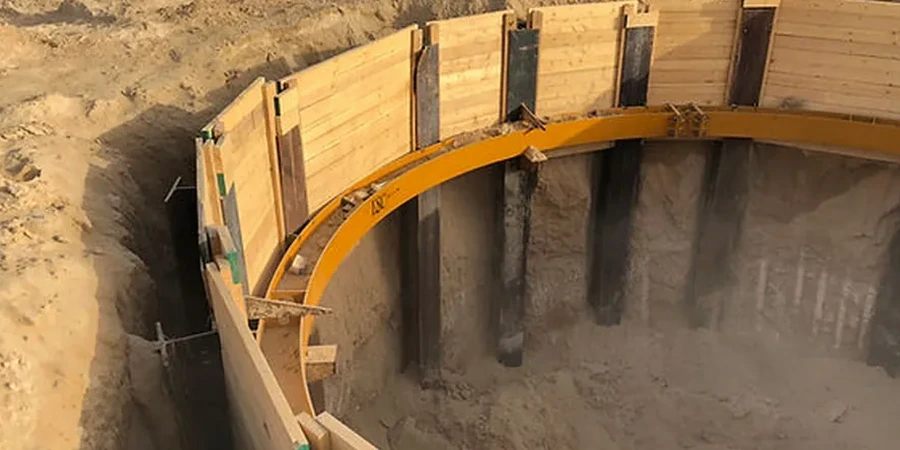
Applications of foundation engineering in Bedford span residential subdivisions, commercial retail parks, and infrastructure projects such as the Bedford Western Bypass. For housing developments on gently sloping terrain, stepped strip footings or cut-and-fill approaches are common to minimise earthworks and preserve natural drainage. Commercial structures, including distribution centres and office blocks, often require piled foundations with reinforced ground beams to support heavy column loads and large floor slabs. In flood-risk areas near the River Great Ouse, foundations are designed with elevated floor levels and water-resistant concrete mixes, sometimes incorporating void formers to accommodate swelling clay action. Infrastructure projects such as bridge abutments and retaining walls employ deep foundations with sacrificial casing to resist lateral soil pressures and scour. Furthermore, retrofit foundations for historical buildings in Bedford’s conservation areas involve underpinning using mini-piles or jet grouting to enhance load capacity without disrupting architectural fabric. These diverse applications demonstrate the tailored approach required to achieve safe, resilient foundations across Bedford’s varied terrain and land-use demands.
Available services
This service complements our laboratory testing work for a complete project analysis.