In Bedford, the management of slope stability and retaining walls is a critical aspect of geotechnical engineering, directly influencing the safety, longevity, and value of both urban and rural developments. This category encompasses the analysis, design, and remediation of natural and man-made slopes, as well as the construction of structures that retain earth, such as gravity walls, sheet pile walls, and reinforced soil systems. Given Bedford's varied topography along the River Great Ouse valley, these services are not merely precautionary but often a regulatory and practical necessity for preventing landslides, erosion, and structural failure.
The local geology of Bedford presents a complex interplay of Jurassic and Cretaceous strata, predominantly comprising Oxford Clay, Kellaways Sand, and the overlying Lower Greensand and Gault Clay. These formations, particularly the weathered Gault Clay, are notoriously prone to softening and loss of strength upon water ingress, making slope stability analysis an essential first step for any project near riverbanks or on inclined ground. The shallow groundwater table in many parts of the borough, combined with the shrink-swell potential of the clays, creates dynamic conditions that demand a thorough understanding of effective stress parameters and pore water pressure regimes to prevent deep-seated or shallow failures.
All geotechnical work in Bedford must adhere to the rigorous framework of British Standards, most notably BS 8002:2015 for earth retaining structures and BS 6031:2009 for earthworks on slopes. Compliance with Eurocode 7 (BS EN 1997-1 and 2) is mandatory, requiring a limit state design approach that considers both ultimate and serviceability conditions. For projects involving highways or public infrastructure, the Design Manual for Roads and Bridges (DMRB) and specifications from Bedford Borough Council, as the local highway authority, will also apply. These standards dictate the required factors of safety, acceptable movement criteria, and the scope of ground investigation necessary to inform a robust design.
This category is indispensable for a wide array of projects, from the construction of residential basements in the Castle Road area, where deep excavations can destabilize neighbouring properties, to the development of commercial infrastructure on the outskirts of town where cuttings and embankments are common. It is equally vital for flood defence works along the River Great Ouse, where slope stability solutions prevent scour and collapse, and for the remediation of historic slopes in locations like Russell Park that may show signs of incipient movement. Whether it involves a temporary earthworks support for a utility trench or a permanent anchored wall for a multi-storey car park, a site-specific geotechnical assessment is the foundation of any durable and insurable construction.
Available services
Quick answers
What are the early warning signs of slope instability I should look for on my property in Bedford?
Common indicators include fresh cracks in the ground or paving, tilting fence posts or trees, the sudden appearance of springs or damp patches, and bulging at the base of a slope. Internally, sticking doors or windows and new plaster cracks can also signal ground movement. If you observe these, a professional slope stability assessment is crucial before any remedial work is planned.
Do I always need a retaining wall for a steep garden slope in Bedford, or are there other solutions?
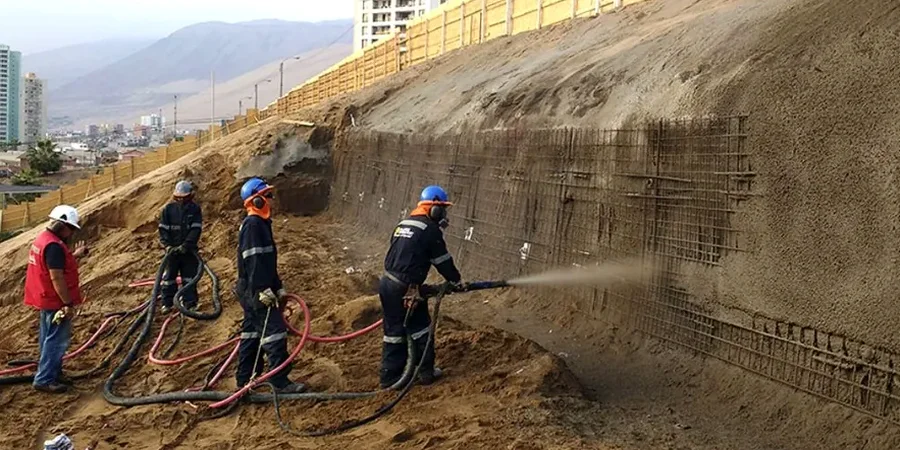
A structural wall is not always the only solution. Alternatives can include soil nailing, reinforced geogrid slopes with a vegetated facing, or regrading the slope to a more stable angle. The optimal approach depends on the specific soil conditions, space constraints, and the height of the slope, all of which must be evaluated against the requirements of BS 6031 and BS 8002.
How does the Gault Clay formation in Bedford affect the design of retaining walls?
Gault Clay is highly susceptible to volume changes from moisture fluctuation and can exert significant swelling pressures on wall backfaces. Its shear strength can rapidly deteriorate if it becomes wet during construction. Therefore, designs must incorporate robust drainage systems to control groundwater, and often require a flexible or heavily reinforced structure to accommodate long-term movements without structural distress.
What are the key British Standards that govern slope and retaining wall design?
The primary standards are Eurocode 7 (BS EN 1997-1 and 2), which provides the overarching geotechnical design philosophy. This is supported by BS 8002:2015, the code of practice for earth retaining structures, and BS 6031:2009, the code for earthworks. For highway-related works, the DMRB is also essential, alongside any specific guidance from Bedford Borough Council.